
Materials, Quality & Compliance
Pre-Shipment Inspection for Bamboo and Wood Houseware: Defect Classification, AQL and Golden Sample Control
How importers set up pre-shipment inspection for bamboo and wood houseware: golden samples, defect classes, AQL limits, moisture, packaging and document checks.
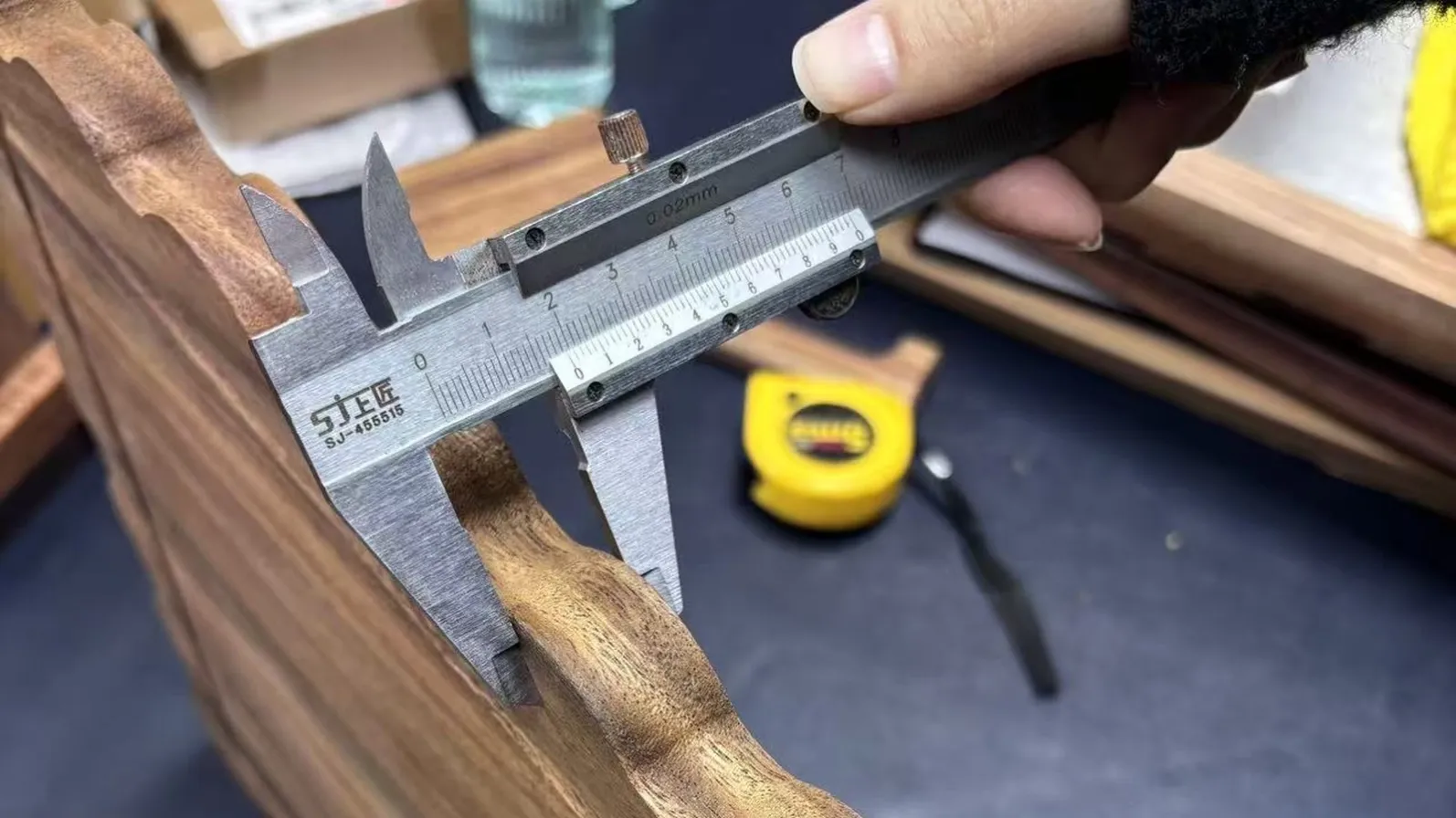
A pre-shipment inspection for bamboo and wood houseware is only as useful as the standard behind it. Before goods are packed, the buyer and supplier should agree on four things in writing: the approved reference (golden) sample, a defect classification list (critical, major and minor), the sampling plan and AQL limits for each defect class, and the checks that sit outside AQL, such as moisture readings, packaging tests, label accuracy and compliance documents. Without those four, an inspection report becomes a debate about what "good enough" meant.
This guide is written for importers, distributors, wholesalers, retail buyers and private-label sourcing teams who already run orders from China and want a tighter, material-specific inspection standard for bamboo cutting boards, wooden kitchenware and bamboo storage products.
Quick Answer: What Should a Bamboo and Wood Houseware Inspection Cover?
Inspection area | What is checked | Reference used |
|---|---|---|
Product identity | Correct SKU, material, set combination, component count | Approved specification and golden sample |
Dimensions and geometry | Length, width, thickness, flatness, warping, squareness | Dimension drawing and agreed tolerances |
Surface and edges | Cracks, splits, splinters, chips, sanding marks, glue marks, finish coverage | Golden sample and defect list |
Construction and function | Glue-line integrity, joints, sliding or expanding movement, stability | Construction specification and functional test method |
Moisture and odor | Moisture readings on sampled units, signs of mold or musty smell | Agreed moisture range for the product and season |
Branding | Logo position, size, engraving depth, print clarity | Approved artwork |
Packaging and labeling | Retail box fit, inserts, barcodes, care cards, carton marks, carton count | Approved dielines, label files and packing list |
Documentation | Documents agreed for the order and market | Purchase order and documentation scope |
The rest of this article explains how to set each of these up so the inspection result is clear and actionable.
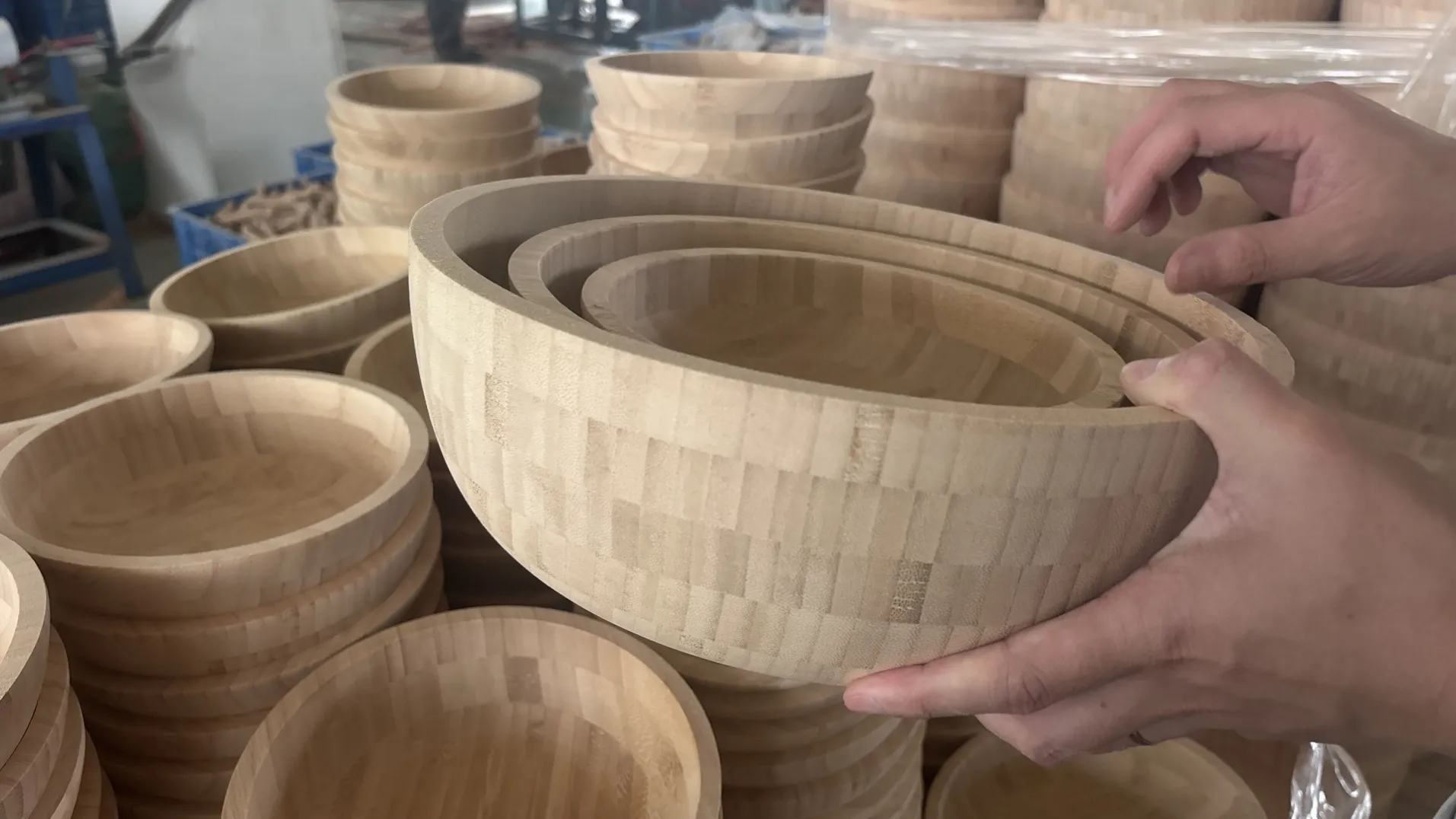
Set combination, rims and surface appearance are checked on bamboo bowls before packing.
Why Generic Inspection Checklists Miss Bamboo and Wood Defects
Most third-party inspection templates are written for general consumer goods. They check quantity, appearance, function and packaging, which is necessary but not sufficient for natural materials.
Bamboo and wood houseware fail in specific ways:
- Moisture-related movement: warping, cupping, twisting or cracks that may develop after packing or during transit.
- Lamination and glue-line issues: separation along laminated bamboo strips or edge-glued wooden panels.
- Surface defects: raised grain, rough patches, splinters on handles and edges, uneven oil or coating coverage.
- Natural variation: grain and color differences that are normal for the material but can still exceed what the buyer accepted at sampling.
- Mold risk: surface mold or a musty smell that may be linked to moisture, packaging conditions or warehouse storage.
- Mechanism issues on storage products: sliding sections that bind or feel loose, misaligned compartments, or unstable assemblies.
An inspection brief for these products should name these failure modes explicitly. Otherwise, inspectors may pass units that look acceptable on a quick visual check but cause returns later.
Step 1: Lock the Golden Sample and Specification Before Production
The most common sample-to-bulk complaint is simple: the sample looked right, but the bulk order did not. In most cases, the sample was never formally locked as the production reference.
A controlled golden sample process should include:
- A dated specification sheet listing material, dimensions, tolerances, construction, finish, logo method, packaging and labeling.
- Signed or clearly approved reference samples, ideally one retained by the buyer and one by the supplier, both labeled with the SKU and approval date.
- An agreed appearance range for grain and color, using limit samples or reference photos rather than the words "natural variation."
- A revision record so any later change to finish, material source, packaging or artwork is approved and traceable.
- A pre-production sample when the project requires it, especially when packaging, logo method or material source changes from the first sample.
On Rewood orders, one approved sample is sent to the buyer and a retained production sample is kept at the factory. Bulk production is then arranged against that retained sample, so the running standard is a physical piece, not a photo or an informal recollection of the first sample.
For bamboo products, the appearance range matters. Bamboo grain and color naturally vary between individual products, so the approved range should be defined during sample review, not argued about during final inspection.
For a broader view of how sample approval fits into supplier qualification, see our guide on how importers evaluate a bamboo and wood houseware manufacturer.
Step 2: Write a Defect Classification List for the Product
A defect classification list tells the inspector how to score what they find. It is usually split into three classes.
Critical defects
Defects that could make the product unsafe, non-compliant or unsellable in the destination market. Many buyers set zero tolerance for this class.
Typical examples for bamboo and wood houseware:
- visible mold on the product or packaging;
- sharp splinters or edges on food-contact or hand-contact areas;
- a product that does not match the material or finish agreed for compliance documentation;
- missing or incorrect mandatory labeling required by the buyer's market;
- foreign objects in the packaging.
Major defects
Defects that affect function, durability, fit or saleability.
- cracks, splits or open glue lines;
- warping or twisting beyond the agreed flatness tolerance;
- dimensions outside tolerance;
- sliding or expanding sections that bind, jam or are excessively loose;
- wrong set combination or missing pieces;
- logo in the wrong position, unreadable engraving or wrong artwork;
- incorrect barcode or mismatched retail label.
Minor defects
Cosmetic deviations that do not affect use but should still be limited.
- small sanding marks or slight surface roughness away from contact areas;
- minor color or grain variation still within the approved range;
- small glue residue in non-visible areas;
- slight carton scuffs that do not affect product protection.
The exact classification should be agreed for each product and channel. A gift-box retail program may treat a visible scratch as major, while a foodservice or bulk-packed program may treat it as minor.
Step 3: Choose the Sampling Plan and AQL Limits
Most pre-shipment inspections use acceptance sampling based on ISO 2859-1 or the equivalent ANSI/ASQ Z1.4 tables. The lot size and inspection level determine how many units are pulled; the AQL for each defect class determines how many defects are allowed before the lot fails.
Points experienced buyers usually agree before production:
- Inspection level: General Inspection Level II is widely used for consumer goods. A higher level pulls more units and costs more time.
- AQL by defect class: a common starting point is zero tolerance for critical defects, with tighter limits for major defects than for minor defects. The exact limits are a commercial decision that should match your channel, price point and returns tolerance.
- Sampling per SKU or per lot: for multi-SKU orders, decide whether each SKU is sampled separately. Mixing SKUs into one sample can hide a problem in a smaller SKU.
- Who decides on a failed lot: sorting and rework, re-inspection, or rejection, and how re-inspection cost is handled.
Remember that AQL sampling proves the lot is statistically within the agreed limit. It does not prove that every unit is defect-free. Features that are critical for safety or compliance may justify 100% checking at the factory rather than relying on sampling alone.
Step 4: Add Material-Specific Checks Outside AQL
Some checks do not fit neatly into a visual AQL count. They should be listed separately in the inspection brief with their own method and acceptance criteria.
Check | Suggested method | Why it matters |
|---|---|---|
Moisture reading | Meter readings on a defined number of sampled units, compared with the agreed range for the product | Moisture is linked to warping, cracking and mold risk in transit |
Flatness and warping | Place boards or panels on a flat surface and measure gaps against tolerance | Rocking boards and twisted panels are a frequent complaint |
Functional test | Open, close or expand sliding parts a set number of times; check stability on a flat surface | Storage products fail on fit and movement, not just appearance |
Odor check | Open sealed retail packs and check for musty or chemical smell | Can be an early indicator of moisture or packaging problems |
Carton drop test | Drop test packed cartons using the method agreed in the packing specification | Confirms packaging protects corners, edges and handles |
Barcode scan | Scan a sample of retail and carton labels | Wrong or unreadable barcodes cause warehouse and retailer rejections |
There is no single correct moisture figure for every bamboo or wooden product. The acceptable range depends on material, construction, season and destination climate, and should be agreed per project. Our guide on preventing mold in bamboo and wooden houseware during ocean shipping explains why a single number is not enough.
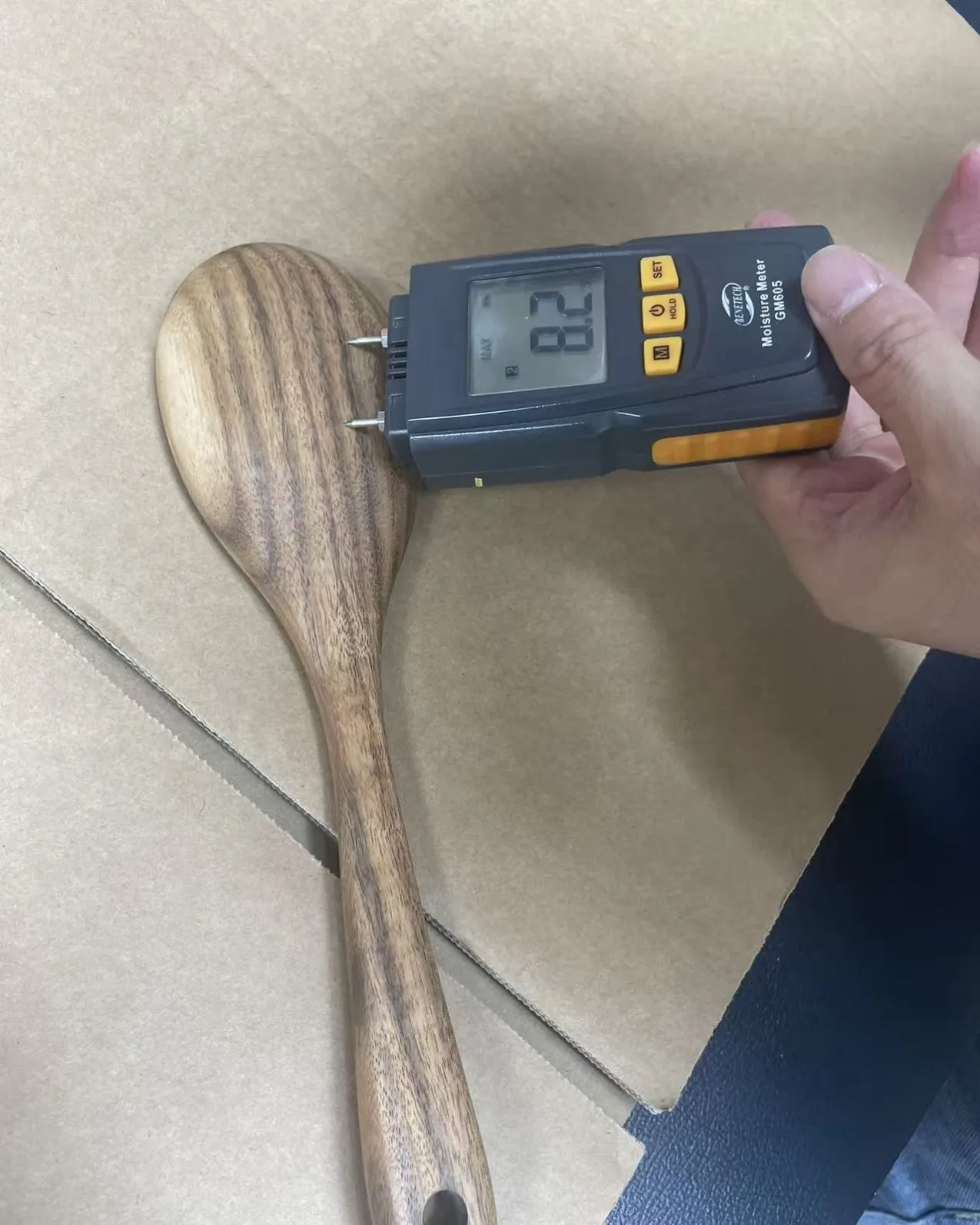
Moisture readings are taken on sampled units and compared with the range agreed for the product, season and destination.
Step 5: Product-Specific Checkpoints
Inspection briefs should be adapted to the product structure. Two examples from Rewood's current range show how the checkpoints differ.
Bamboo cutting board sets
For a product such as our custom bamboo cutting board set, the published quality-control points include:
- correct small, medium and large board combination;
- board length, width, thickness and dimensional tolerance;
- board flatness and inspection for visible warping;
- juice-groove depth, width, position and consistency;
- handle size, position and edge finish;
- inspection for cracks, chips, splinters, glue marks and scratches;
- bamboo grain and color within the approved production range;
- logo size, position and engraving or print clarity;
- correct set quantity, packaging fit, barcode accuracy and export carton marks.
Bamboo expandable drawer organizers
For storage products such as a bamboo expandable drawer organizer, the inspection focus shifts toward structure and movement:
- expansion range and sliding consistency;
- sliding sections checked for excessive looseness or binding;
- component alignment and compartment layout against the approved drawing or sample;
- edge and corner finishing;
- inspection for cracks, chips, splinters, scratches and visible glue marks;
- packaging that protects sliding components and edges in the closed configuration.
Final dimensions, tolerances and finish for both product types are confirmed against the approved drawing or production sample for each order.
Step 6: Inspect Packaging, Labels and Cartons as Part of the Product
For private-label and retail programs, packaging errors are often more expensive than product defects. A carton with the wrong barcode can be rejected at a distribution center even when every product inside is perfect.
Packaging checks should cover:
- retail box or sleeve fit, print color and artwork version;
- inserts, care cards and instruction leaflets;
- UPC, EAN or other retailer labels and their placement;
- product protection inside the box, especially corners, handles and sliding parts;
- quantity per inner and master carton;
- carton dimensions, weights and shipping marks against the packing list;
- separation of SKUs in multi-SKU orders so artwork and labels are not mixed.
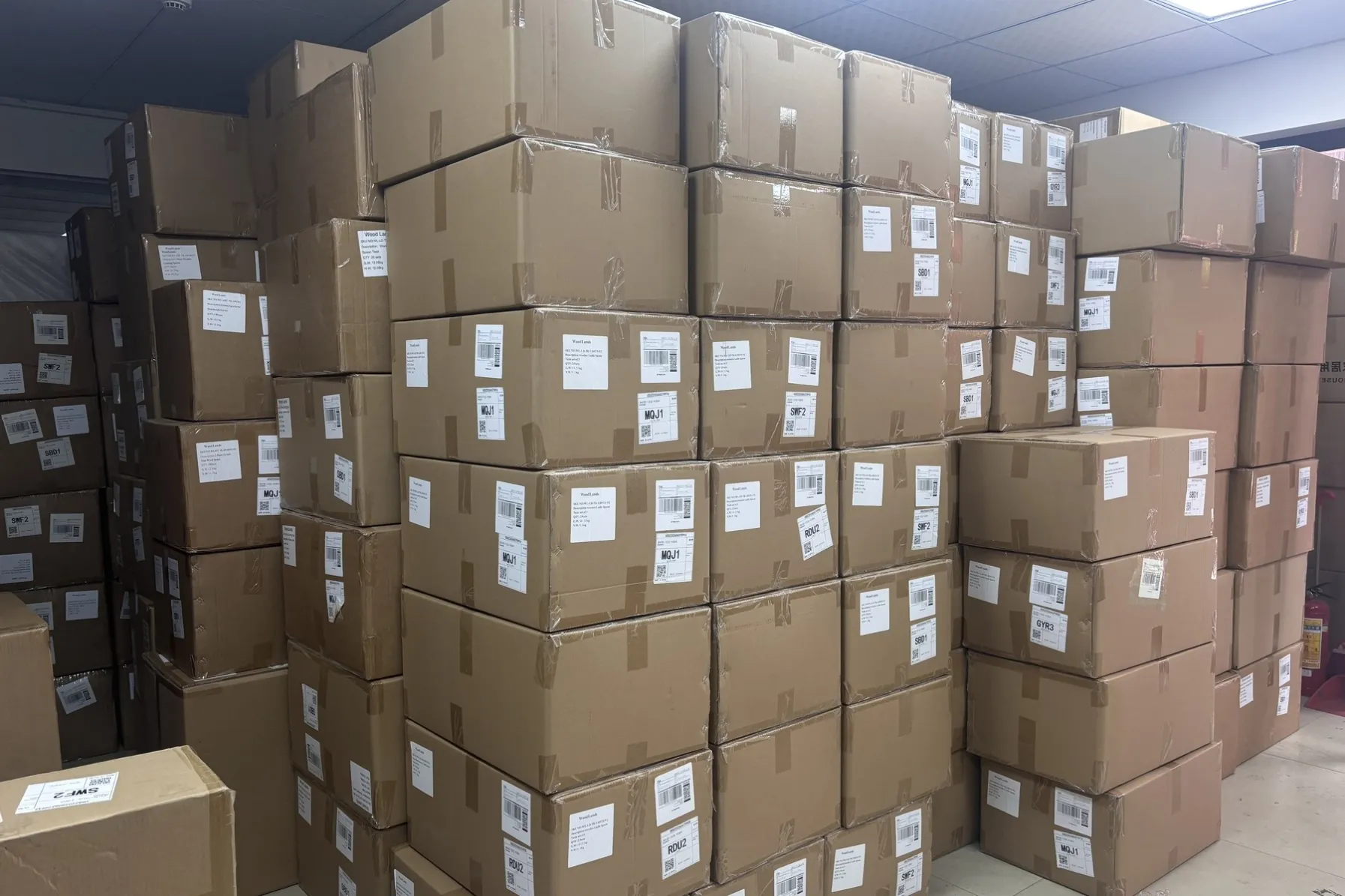
After packing, outer cartons are checked for marks, labels and quantity against the packing list.
Step 7: Check Documents Against the Order, Not Against a Catalog
Pre-shipment inspection is also the right time to confirm that the documents agreed for the order are ready and match the goods being shipped. This is not about collecting every certificate a supplier holds; it is about checking that the agreed documents apply to this product, this material and this market.
Depending on the project, the documentation scope may include:
- Food-contact testing: reports that match the actual material, finish and intended use of the SKU. A report for a different product or finish may not apply. Our FDA, LFGB, REACH and FSC guide for bamboo and wooden kitchenware explains the difference between a test report, a certificate and a declaration.
- FSC: FSC claims apply only to eligible products and only when the order is placed and documented within the certificate scope. A supplier holding an FSC certificate does not mean every product is FSC-certified.
- BSCI: amfori BSCI relates to social-compliance auditing of a facility. It is not a product certification.
- EUDR: for EU-bound products classified within EUDR scope, the operator placing goods on the EU market is responsible for due diligence, and the supplier can support it with order-specific traceability information. According to the European Commission, the EUDR applies from 30 December 2026 for large and medium-sized operators and from 30 June 2027 for micro and small enterprises. Products made solely of bamboo are generally treated differently from wooden products, so material and classification should be confirmed for each SKU.
If any agreed document is not ready, it is better to know before loading than after arrival.
Who Should Inspect: Factory QC, Third Party or Buyer?
The three inspection layers answer different questions:
Layer | Question it answers | Limitation |
|---|---|---|
Factory QC (incoming, in-process, final) | Is production conforming as it runs? | Not independent of the supplier |
Third-party pre-shipment inspection | Does this lot meet the agreed standard? | Only as good as the brief and reference sample |
Buyer visit or audit | Is the process and team capable over time? | Samples time, not units |
Experienced buyers usually combine them: factory QC throughout production, a third-party final inspection for higher-risk or new SKUs, and periodic audits or visits for long-term programs. For first orders, new tooling or new packaging, a during-production inspection can catch systematic issues while there is still time to correct them.
Common Inspection Mistakes Importers Should Avoid
- Inspecting against photos instead of a physical golden sample. Color, sheen and surface feel are difficult to judge from photos.
- Leaving the appearance range undefined. "Natural variation" without limit samples invites disputes.
- Using one AQL for every defect type. Critical, major and minor defects need different limits.
- Sampling mixed SKUs together. Problems in a small SKU can disappear in a combined sample.
- Inspecting only after everything is sealed. Packed goods are harder and slower to rework.
- Skipping packaging and label checks. Barcode and carton-mark errors cause downstream rejections.
- Treating a pass as a guarantee. A pass means the sampled lot met the agreed limits, not that zero defects exist.
How Rewood Supports Inspection-Ready Orders
Rewood's bamboo and wood manufacturing is based in Longquan, Zhejiang, and the Yiwu team coordinates sampling, customization, packaging, quality control and export preparation.
Factory quality control typically starts with incoming material screening, so scarred or defective stock can be rejected before production. During production, a second inspection is normally carried out after sanding, to check that sanding quality is consistent across the batch. A third inspection is done before packing. After the goods are packed, outer cartons are checked again, including marks, labels and carton count.
For each project, we work from confirmed specifications, approved samples, packaging details and agreed quality requirements. One approved sample is sent to the buyer, and a retained production sample is kept so bulk production can follow the same standard. Dimensional inspection, surface QC and packaging inspection follow the approved standard, and buyer-appointed third-party inspection can be accommodated when it is agreed in the order terms.
Sample and production timing depend on the product, quantity, customization and packaging. As a general guide, samples usually take approximately 7–15 days, and bulk production typically takes approximately 20–35 days after sample approval. Allow extra time when a during-production or third-party inspection is planned; the exact schedule is confirmed for each order.
Frequently Asked Questions
What AQL should I use for bamboo kitchenware?
There is no single required AQL. Many buyers use zero tolerance for critical defects and tighter limits for major than minor defects, with General Inspection Level II as a starting point. The right limits depend on your sales channel, price point and returns tolerance, and should be written into the purchase terms before production.
When should a pre-shipment inspection take place?
A final random inspection is usually scheduled when production is complete and most goods are packed, so the inspector can check finished packaging. For first orders or new designs, an additional during-production inspection helps catch systematic issues early.
Can the factory's own QC replace third-party inspection?
Factory QC is essential for catching problems during production, but it is not independent. Third-party inspection provides independent evidence for the specific lot. Many buyers use both, depending on order risk.
How should natural grain and color variation be inspected?
Agree on an acceptable appearance range during sample approval, using limit samples or reference photos, and record it in the specification. Inspectors then judge variation against that range rather than against a single perfect unit.
Does passing inspection mean the order is compliant with FDA, LFGB, FSC or EUDR?
No. A visual and functional inspection does not replace product-specific testing, certification scope or due diligence. Compliance documents should be agreed for each product and market and checked separately against the order.
What should I send a supplier to prepare for inspection?
Send the specification sheet, approved sample references, defect classification list, AQL limits, packaging and label files, packing list and any required documents. Sharing the inspection brief before production lets the supplier align its own QC with your standard.
Planning Your Next Bamboo or Wood Houseware Order?
Send us your SKU list, approved samples or drawings, target AQL and defect list, packaging and label files, destination market and required documents. We will review the specification, confirm which checks apply to each SKU and quote with the inspection standard built in. Contact Rewood Houseware to start your RFQ.
Email: info@rewoodoffice.com
WhatsApp: +86 15024561325
About the Author
Written by Jessie Jiang
Overseas Business Development, Rewood Houseware
Jessie works with importers, distributors, wholesalers, retailers and private-label brands on bamboo and wood houseware manufacturing, product development, packaging coordination and export projects.
Reviewed by the Rewood Product Development & Quality Control Team
This article is based on Rewood's current product quality-control points and on practical experience supporting sampling, inspection, private-label packaging and export coordination for bamboo and wood houseware programs.
Last Updated: November 17, 2026