
Aug 16, 2026Product Development & Case Studies
From Factory to Container: How Rewood Prepares Bamboo & Wood Houseware for Export
See how Rewood prepares bamboo and wooden houseware orders for container loading, including pallet staging, forklift handling, shipment checks and export coordination
For importers, distributors, retailers and private-label homeware brands, production is not the final step of a B2B order.
Before finished goods leave the factory, the shipment still needs to move through carton identification, final packaging checks, shipment grouping, pallet preparation where required, forklift handling and container loading.
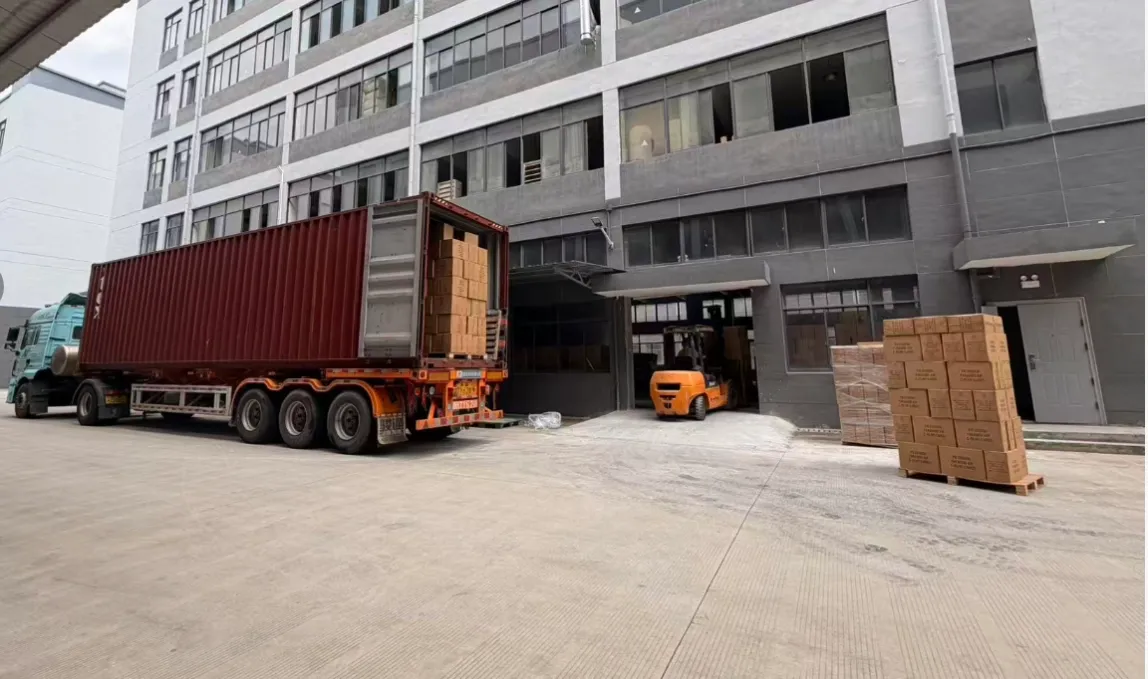
The photographs in this case show a real outbound container-loading operation at Rewood’s current Longquan manufacturing facility in Zhejiang, China.
Export cartons were staged outside the loading area, selected cartons were grouped on pallets for handling, a forklift moved goods between the factory and loading area, and cartons were loaded into the outbound container.
For projects that require it, Rewood can also provide pallets, arrange palletizing, apply stretch wrapping or other suitable load stabilization, and coordinate shipment preparation before logistics handover.
The exact customer, destination, quantities and commercial terms are not disclosed.
The purpose of this case is to show professional buyers what happens between finished production and actual export shipment.
Quick Answer: What Happens Before a Houseware Container Leaves the Factory?
Depending on the project and shipping arrangement, final shipment preparation may include:
- Confirming the products and SKUs included in the shipment
- Checking carton quantities and shipment identification
- Reviewing visible export-carton condition
- Confirming shipping marks and labels
- Grouping cartons by SKU or order when required
- Supplying pallets when the logistics plan requires them
- Palletizing selected carton groups
- Applying stretch wrapping or suitable stabilization where required
- Staging goods near the loading area
- Moving cartons or palletized groups by forklift
- Loading the container according to the shipment plan
- Completing the handover into the outbound logistics process
Not every shipment requires exactly the same loading method.
For example, some projects may use pallets for grouped handling, while another container may use a different loading configuration to make better use of container space.
The appropriate method should be based on the product, carton dimensions, shipment quantity, warehouse requirements and logistics plan.
What This Real Container-Loading Case Shows
These photographs were taken during an actual outbound loading operation at Rewood’s Longquan manufacturing facility.
Visible elements include:
- Export cartons ready for shipment
- An open export container
- Forklift handling
- Cartons staged outside the factory
- Cartons grouped on pallets
- Palletized shipment preparation
- Physical container loading activity
- Goods moving from factory staging into outbound logistics
This is different from a staged factory photograph.
The images document a real point in the supply chain where completed goods are leaving the manufacturing location.
However, a professional buyer should also understand that container loading is only the final physical stage of a much longer order-control process.
1. Confirm the Finished Shipment Before Loading
Before goods are moved toward the container, the shipment should be checked against the confirmed order information.
Depending on the project, this may include:
- Customer or purchase-order reference
- SKU or item number
- Product description
- Shipment quantity
- Quantity per carton
- Number of cartons
- Packaging version
- Barcode requirements
- Shipping marks
- Destination information
- Special handling instructions
This becomes particularly important when one buyer has several SKUs in the same order.
A loading mistake involving the wrong carton group can create problems later even if every individual product was manufactured correctly.
For multi-SKU orders, cartons should therefore remain clearly identifiable throughout shipment preparation.
2. Check Export Carton Condition Before Loading
Retail packaging and export cartons have different functions.
Retail packaging protects and presents the individual product.
The export carton needs to protect multiple units through handling, loading and transportation.
Before loading, visible carton condition should be reviewed for obvious issues such as:
- Crushed cartons
- Torn corrugated board
- Open carton seams
- Loose sealing tape
- Major dents
- Damaged corners
- Water exposure
- Significant carton deformation
- Missing labels
- Incorrect or unreadable shipping marks
This does not replace product QC.
It is an additional shipment-stage check focused on whether the external shipping package is ready to move into the logistics chain.
For relatively heavy bamboo and wooden houseware products, carton strength and packing configuration deserve particular attention because unsuitable cartons may deform during stacking or transportation.
3. Rewood Can Provide Pallets When the Shipping Plan Requires Them
For suitable B2B projects, Rewood can provide pallets as part of shipment preparation.
Pallets may be useful when a buyer or logistics provider wants cartons grouped into larger handling units.
Depending on the project, pallet-related support may include:
- Pallet supply
- Carton grouping
- Palletizing
- SKU separation
- Arrangement of cartons on the pallet
- Stretch wrapping
- Load stabilization
- Pallet identification
- Forklift handling
- Outbound shipment staging
Palletization is not mandatory for every order.
The correct decision depends on factors such as:
- Carton dimensions
- Carton weight
- Shipment volume
- Freight method
- Container utilization
- Destination warehouse requirements
- Forklift-handling requirements
- Buyer instructions
For this reason, Rewood treats pallets as a project-specific logistics option, rather than automatically adding them to every shipment.
4. Palletizing Helps Organize Selected Shipment Groups
When palletizing is appropriate, cartons can be grouped into a more controlled handling unit.
Potential advantages may include:
- Reducing repeated handling of individual cartons
- Keeping designated cartons together
- Supporting forklift movement
- Making SKU groups easier to identify
- Improving local loading organization
- Supporting warehouse receiving processes that prefer palletized goods
For multi-SKU projects, pallet grouping may also help distinguish:
- Different product models
- Different purchase orders
- Different packaging versions
- Different retail destinations
- Different customer references
However, pallets take up physical space.
The buyer should therefore consider both handling convenience and freight efficiency.
A pallet solution that is useful for warehouse operations may not always be the most space-efficient configuration for every container shipment.
5. Pallet Configuration Should Be Confirmed Before Shipment
When pallets are required, relevant shipment details should be discussed before loading day.
Depending on the logistics plan, the buyer or supplier may need to confirm:
- Pallet dimensions
- Pallet type
- Number of pallets
- Cartons per pallet
- Loaded pallet height
- Gross pallet weight
- Stretch-wrapping requirements
- Additional stabilization requirements
- Pallet labels
- Destination warehouse restrictions
These details can affect:
- Total shipment dimensions
- Freight cost
- Container-space utilization
- Forklift handling
- Warehouse receiving
Professional export preparation therefore requires more than simply placing boxes on a pallet.
The pallet configuration should fit the actual shipment plan.
6. Stretch Wrapping Is an Additional Handling Measure
Where palletized cartons require stabilization, stretch wrapping can help keep grouped cartons together during local handling.
It may also help:
- Reduce movement between cartons
- Keep pallet groups more stable
- Support forklift handling
- Protect cartons from dust during staging
- Keep identified carton groups together
However:
Stretch wrapping does not replace suitable product packaging or a proper export carton.
A complete packaging system may still need to consider:
- Product protection
- Individual or retail packaging
- Internal protective materials
- Export-carton strength
- Carton arrangement
- Palletization where required
- Shipment stabilization
- Logistics handling
Stretch wrapping is therefore an additional logistics-preparation measure, not the primary product packaging.
7. How Container Loading Is Coordinated at the Factory
Once the shipment is ready, cartons need to move from the staging area into the outbound container.
At Rewood’s Longquan factory, suitable handling equipment can be used to move prepared goods between the factory loading area and the container.
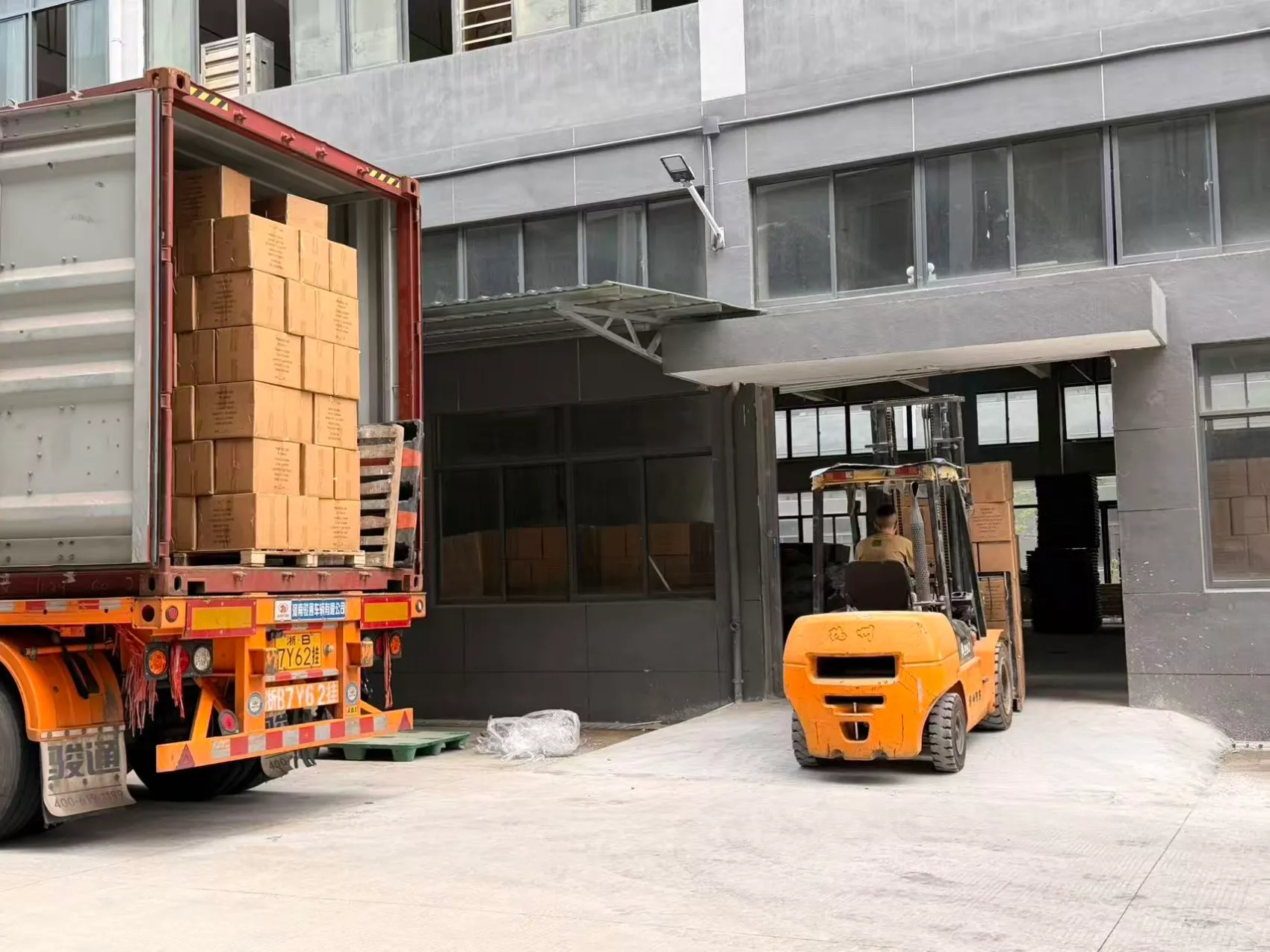
Export cartons staged on pallets for forklift handling and outbound container loading at Rewood’s Longquan factory.
During this stage, practical loading questions may include:
- Are the correct cartons being moved?
- Is the expected shipment group complete?
- Are carton labels still visible and readable?
- Are visibly damaged cartons being addressed?
- Are palletized groups stable enough for handling?
- Is the loading sequence suitable for the shipment?
- Are different SKUs clearly identified?
- Have special logistics instructions been communicated?
The exact container-loading method depends on the project.
The objective is not to create unnecessary procedures.
The objective is to prevent avoidable mistakes during the point where physical control of the goods moves from factory shipment preparation into outbound logistics.
8. Palletized Staging and Container Loading Are Not Always the Same Thing
One important point for professional buyers is that using pallets during factory staging does not necessarily mean every pallet must remain inside the export container.
A shipment may use pallets for:
- Factory handling
- Grouped staging
- Moving cartons by forklift
- Temporary SKU separation
while the final container-loading configuration may be decided according to the logistics plan.
In another project, the buyer may specifically require palletized delivery all the way to the destination warehouse.
These are different logistics requirements.
Therefore, buyers should clearly specify whether pallets are needed for:
- Factory handling only
- Local transport
- Container transport
- Final warehouse delivery
This distinction can affect both handling and freight efficiency.
9. Shipping Marks and Labels Need to Match the Order
A carton can contain the correct product and still create a receiving problem if its identification is wrong.
Depending on the project, carton information may include:
- Customer reference
- Purchase-order number
- SKU
- Item number
- Product description
- Quantity
- Gross weight
- Net weight
- Carton dimensions
- Shipping marks
- Barcode information
- Retailer labels
- FNSKU labels where applicable
- Destination information
Not every project requires every item listed above.
The important principle is that carton and shipment identification should match the buyer’s actual warehouse, retail or fulfillment requirements.
For multi-SKU orders, accurate identification becomes even more important because several visually similar cartons may belong to different products or packaging versions.
10. Multi-SKU Houseware Orders Require Stronger Shipment Control
Established homeware buyers often purchase more than one product category.
A sourcing program may include:
- Bamboo kitchenware
- Wooden utensils
- Cutting boards
- Home storage products
- Office organization
- Bathroom products
- Mixed-material homeware
- Complementary home-and-living products
Those SKUs may have different:
- Product dimensions
- Carton sizes
- Quantities
- Packaging
- Labels
- Production schedules
- Manufacturing sources
This is why professional multi-SKU sourcing requires more than simply placing finished cartons into a container.
The overall process may look more like:
Specification → Sampling → Production → QC → Packaging → Labeling → Carton Identification → Shipment Grouping → Palletizing When Required → Container Loading → Logistics Handover
Each stage needs to stay connected to the correct SKU.
11. Container Loading Is the Final Stage of a Longer QC Process
A photograph of a container being loaded is useful evidence of real shipment activity.
But container loading itself is not product quality control.
Before a professional B2B order reaches this stage, the project may already have passed through:
- Product-specification confirmation
- Sample development
- Sample approval
- Production
- In-process checking
- Packaging confirmation
- Logo and label confirmation
- Final product inspection
- Export-carton preparation
Only after those stages should the approved goods move into shipment preparation and loading.
This distinction matters because a full container does not automatically prove that the products inside meet the buyer’s specification.
A professional supplier should connect shipment evidence with product specifications and agreed QC requirements.
12. Shipment Planning Should Start Before Loading Day
Container loading should not be the first time the team considers logistics.
Important shipment decisions often begin much earlier.
During RFQ
The buyer should ideally provide:
- Product information
- Estimated quantity
- Target market
- Delivery destination
- Packaging requirements
During Sampling
The project can begin confirming:
- Product structure
- Branding
- Individual packaging
- Label requirements
Before Production
The latest approved product and packaging version should be clear.
During Production
Product, packaging and QC status should be followed.
Before Shipment
The project should confirm:
- Final shipment quantity
- Carton configuration
- Shipping marks
- Labels
- Pallet requirements
- Shipment grouping
- Container or logistics arrangement
- Pickup information
Good export preparation therefore begins well before the container reaches the factory.
Buyer Checklist Before a Houseware Container Is Loaded
Shipment Area | What the Buyer Should Confirm |
|---|---|
Product | Correct SKU and approved product version |
Quantity | Agreed shipment quantity |
Packaging | Correct individual and export packaging |
Export Cartons | Correct carton configuration and visible condition |
Labels | Correct SKU, barcode or retailer labels where required |
Shipping Marks | Correct buyer and logistics information |
Pallet Supply | Whether pallets are required |
Palletizing | Which cartons or SKU groups should be palletized |
Stabilization | Stretch wrapping or other protection where required |
Shipment Grouping | How multiple SKUs are separated |
Container Loading | Loading configuration and logistics requirements |
Handover | Responsibility at the outbound shipment stage |
For professional buyers comparing suppliers, these details can be commercially important.
The lowest factory unit price does not automatically create the lowest sourcing cost if packaging, labeling, shipment preparation or logistics coordination are poorly managed.
13. What These Container-Loading Photos Can—and Cannot—Prove
Real loading photographs are valuable because they document an actual physical shipment stage.
The photographs in this article can visually show:
- Rewood’s current Longquan factory loading area
- Physical export cartons
- Pallet staging
- Forklift handling
- An outbound container
- Actual loading activity
However, photographs alone do not prove:
- Exact order quantity
- Customer identity
- Destination market
- Product specification
- Product compliance
- Inspection result
- Certification scope
- The contents of every individual carton
Those points require separate project records or documentation.
For professional buyers, this distinction matters. Supplier evaluation should combine real production and shipment evidence with specifications, samples, QC records, packaging information and clear communication.
For a broader supplier-qualification checklist, buyers can also review our bamboo and wood houseware manufacturer evaluation guide.
14. Rewood’s Longquan Factory and Yiwu Office Have Different Roles
Rewood’s current Longquan facility is our bamboo and wood manufacturing base.
Our Yiwu operation performs a different commercial and export-coordination role.
Depending on the project, the Longquan manufacturing side may support:
- Bamboo and wood processing
- Product production
- Assembly
- Surface finishing
- Production-stage QC
- Packaging preparation
- Factory shipment preparation
The Yiwu team may support:
- Buyer communication
- RFQ coordination
- Sample follow-up
- Packaging artwork
- Barcode and label requirements
- Multi-SKU coordination
- Selected sourcing projects
- Export coordination
- Shipment preparation and logistics follow-up
For selected complementary categories, Rewood may also coordinate with partner factories.
We believe these manufacturing and coordination roles should remain transparent rather than presenting every product or shipment as if it came from the same production location.
How Rewood Supports Export-Ready B2B Houseware Orders
Rewood works with importers, distributors, wholesalers, retailers, private-label brands and selected e-commerce sellers on bamboo, wooden and related home-and-living products.
Depending on the project, support may include:
- OEM/ODM product development
- Sample development
- Product specification coordination
- Custom logo application
- Private-label packaging
- Barcode and label coordination
- FNSKU labeling where required
- Production follow-up
- Quality-control coordination
- Export-carton preparation
- Shipping marks
- Multi-SKU coordination
- Pallet supply
- Palletizing
- Stretch wrapping and load stabilization
- Forklift handling
- Shipment staging
- Container-loading coordination
- Export and logistics handover support
The exact product, packaging, pallet and shipping configuration should be confirmed according to the individual project.
What Information Should Buyers Provide for a New Project?
For an initial evaluation, please send:
- Product name or reference image
- Product dimensions
- Material preference
- Estimated quantity
- Number of SKUs
- Target market
- Logo requirements
- Packaging requirements
- Barcode or labeling requirements
- Pallet requirements if known
- Delivery country or destination
- Expected timeline
Not every detail needs to be finalized before the first discussion.
However, clearer project information allows product, packaging and shipment requirements to be evaluated more accurately.
Buyers can also review our guide to requesting a quote for custom bamboo and wood houseware when preparing a new RFQ.
Frequently Asked Questions
Can Rewood Provide Pallets for Export Orders?
Yes. For suitable projects, Rewood can provide pallets and arrange palletizing according to the shipment and logistics requirements.
Is Palletizing Required for Every Container?
No. Palletization depends on carton dimensions, product weight, shipment size, freight method, destination warehouse requirements and the buyer’s logistics plan.
Can Rewood Arrange Stretch Wrapping?
Yes. Stretch wrapping or other suitable stabilization can be arranged for palletized shipment groups when required.
Does Palletized Staging Mean the Pallets Must Stay Inside the Container?
Not necessarily. Pallets may be used for factory handling and staging, while final loading may follow a different agreed configuration. In other projects, buyers may require palletized delivery through to destination.
Can Rewood Handle Multi-SKU Container Shipments?
Multi-SKU shipments can be coordinated according to the product mix, carton configuration, labeling, shipment grouping and logistics requirements.
Can Custom Shipping Marks and Labels Be Arranged?
Yes. Shipping marks, barcodes, product labels and other identification requirements can be coordinated according to the confirmed project.
Is the Longquan Facility Rewood’s Current Factory?
Yes. Rewood’s current bamboo and wood manufacturing operations are based at the Longquan facility in Zhejiang.
Is Container Loading the Same as Final Quality Inspection?
No. Container loading is a shipment stage. Product inspection and quality requirements should be completed according to the agreed project arrangement before the goods are released for shipment.
Discuss Your Next Bamboo & Wood Houseware Project
A successful B2B order involves more than manufacturing the product.
Product specifications, sampling, QC, packaging, carton identification, pallet preparation and final shipment all need to connect correctly.
If you are preparing a bamboo or wooden houseware project, private-label program, multi-SKU order or export shipment, send Rewood your product reference, estimated quantity, target market, packaging requirements and delivery destination.
About the Author
Written by Jessie Jiang
Overseas Business Development, Rewood Houseware
Jessie works with importers, distributors, retailers and private-label brands on bamboo and wood houseware manufacturing, OEM/ODM product development, private-label packaging, order coordination and export projects.
Reviewed by the Rewood Manufacturing & Export Coordination Team
This article is based on a real outbound container-loading operation at Rewood’s current Longquan manufacturing facility and Rewood’s practical experience supporting B2B houseware production, packaging and shipment preparation.
Last updated: August 16, 2026